PAM & Stock Assessments
More information can be found on our PAM-Stocks site.
Project 1: Incorporating glider data in a species distribution modeling framework
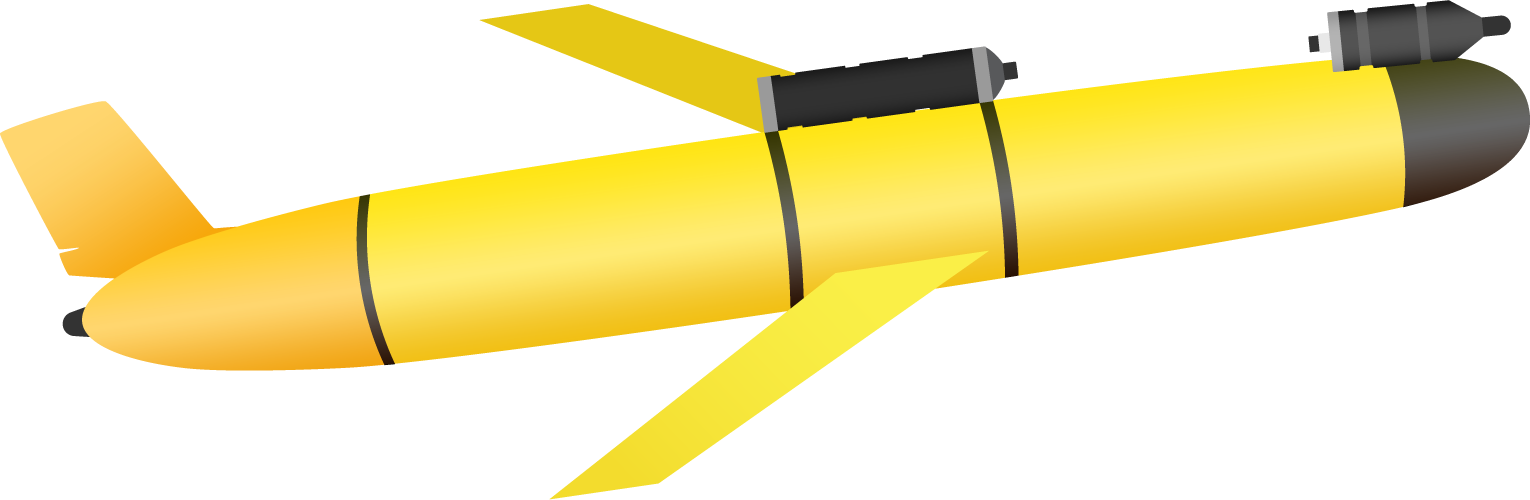
Team Leads
Erin Oleson (PIFSC), Yvonne Barkley (PIFSC)
Target outcome
Advancing the accuracy of stock assessments to capture seasonal and long-term changes in distribution using PAM glider datasets.
Summary
This project would develop the analytical framework necessary to integrate PAM data from profiling gliders into quantitative assessments of population distribution and density. The PAM and UxS SIs are heavily investing in the testing and development of PAM-equipped gliders and this effort would ensure that those developments are more quickly leveraged to improve cetacean assessments. This project would focus on developing a statistical framework for integrating a density model created with PAM glider data with existing visual-based species distribution models (SDM) to achieve more accurate ensemble models with seasonal context. This project may leverage an OPR Climate IRA proposal by Badger & Whitney, if funded.
Project 2: Incorporating stationary data into a species distribution modeling framework
Team leads
Lance Garrison (SEFSC), Melissa Soldevilla (SEFSC), Ann Allen (PIFSC), Genevieve Davis (NEFSC), Manolo Castellote (AFSC), Marla Holt (NWFSC), Jason Gedamke (OST)
Target outcome:
Integrating long-term PAM data into species density models to provide seasonal and long-term changes in distribution and density.
Summary
This project would support the PAM SI objective of advancing data integration by leveraging stationary PAM data and visual data to improve the accuracy of stock assessments by capturing seasonal and long-term changes. This project would focus on developing a statistical framework for integrating a density model created with stationary PAM data with existing visual-based SDMs to achieve more accurate models with seasonal context. This project may leverage LISTEN GoMex funding to develop models for sperm whales and beaked whales.
Project 3: Density Estimation using mobile DASBRs
This project aims to advance the applications of the mobile passive acoustic monitoring platforms for stock assessment of cryptic, deep-diving marine mammals in difficult to monitor areas. Building on the developments of the West Coast and Pacific Island Regions, DASBRs, or Drifting Acoustic Recording Buoys, will be deployed in strategic areas off the continental shelf of the East Coast. The DASBRs will provide additional remote data collection to complement the shipboard efforts conducted by the NEFSC. Specifically, DASBRs will extend survey periods into poor weather months where there is little temporal effort (e.g. fall, spring). From this project, we anticipate being able to provide density estimates of goose-beaked, Blainville’s, True’s, and Sowerby’s beaked whales for the NMFS stock assessment reports.